
Fatigue Life: Steel Bikes
cyclingcraftessayNorman Mailer hated plastic. I have a five-thousand-dollar garage and the wrong welder.
Norman Mailer hated plastic. Not in the tote-bag, sort-your-recycling way we're all supposed to hate it now, but morally, the way you'd hate a man who lies to your face and keeps smiling. His complaint was that plastic never ages. Wood goes gray and splits along the grain. Leather cracks and darkens exactly where your hand keeps landing. Steel rusts, dents, and picks up a patina that is really just a logbook of everywhere it has been. Plastic does none of this. It shows up looking cheap and then, forty years later, it is still there, still looking cheap, having learned absolutely nothing. It skips the entire dignified middle where a material earns a history. It goes straight from new to garbage with no interesting stop in between.
I ran into that idea a couple of years into being a man who thinks about bicycles more than a grown adult with three kids and a job should.
Because here is the embarrassing truth I had never explained to myself: I love steel bikes. Not in a collector way, not in a numbers way. I love the way they ride, and I could not have told you why. I took a bike mechanics class, twenty hours of it, in a shop in Pennsylvania, and I liked it so much that I put a deposit down at a frame-building school to learn how to braze steel tubes into an actual bicycle with my own hands. I did all of that on instinct, the way you follow a smell into a kitchen.
My enthusiasm and my ignorance were, for most of this, in open disagreement. I spent five thousand dollars rebuilding a garage around a machine I did not yet know how to operate. Then I learned to MIG weld. Then I got good enough at MIG welding to be dangerous, which is the most expensive place a hobby can leave you. Some months into all this I discovered that essentially nobody builds a steel bicycle frame by welding it. You braze it. Lower heat, different torch, and the crucial difference is that brazing never melts the thing it is joining. It wets the joint and draws the filler in by capillary action, the parent metal pulling the repair into itself. I had bought the wrong machine and taught myself the wrong skill for the precise hobby I was chasing, and I had done it with total conviction.
I regret none of it. I work in bits. I have spent a career in bits, in software and strategy and slide decks, in ideas that persist exactly as long as somebody is willing to keep looking at them and evaporate the moment nobody is, the whole weightless apparatus liable to be undone by a dead server or a reorg. Nothing I have ever made at work has had a mass. Learning to weld was the first thing in twenty years that put heat into an object and left a mark on it whether I wanted the mark or not.
Only later did I go looking for the reason for any of it. The reason, it turns out, is that the three materials you can build a bike out of are three completely different theories of how a thing should live and die.
Take aluminum. I own an aluminum bike. It is fine. That is the nicest word I have for it. Aluminum is light and it is cheap and it feels cheap, a kind of hollow, buzzy stiffness, like riding a soda can that someone taught to hold a line. And here is the part nobody tells you at the shop: aluminum has a fatigue life. That is not poetry, it is engineering. Aluminum has no endurance limit, which means there is no load light enough to be free. Every pedal stroke costs it something, however small, and the debt never clears and the metal never heals, and one day the number simply runs out. It does not warn you. It does not go soft or start to complain. It just cracks, on a Tuesday, for no reason you did anything to deserve. A material that spends its whole life pretending to be fine and then quits without notice. I have known people like that.
Then there is carbon fiber. I own one of those too, and I will admit it is a genuine marvel, light as a rumor and stiff in all the right places. Carbon is the miracle material, strong far past what anything that weighs so little has any business being. But it is strong the way glass is strong. It is strong, and strong, and strong, and then it is a pile of splinters on the road and your collarbone is somewhere it should not be. There is no bend, no dent, no honest sign of wear. There is only before and after. I find carbon fascinating precisely because of this. It is the most modern possible answer to the question of what a thing should be: maximum performance, zero grace, no middle. Carbon fiber is plastic that went to a good school. Mailer would have loathed it and I think he would have been at least half right.
And then there is steel.
Steel bends before it breaks. It gives you warning. And unlike aluminum, steel has an endurance limit: below a certain stress it accumulates no damage at all, forever, which is a strange and generous property for a material to have. Ride it gently enough and it keeps no record. Ride it hard and it does, but even then it tells you, and when something finally goes wrong you can usually fix it, because steel can be cut and brazed and added to and mended by a person with a torch and some patience. It rusts, yes, but rust is not an ending. Rust is just the metal writing things down. A steel frame gets dented and keeps rolling. It gets handed to your kid. It gets repainted and refit and it outlives the man who brazed it. Steel is the only one of the three that ages the way Mailer wanted things to age, honestly, out loud, in a way you can read.
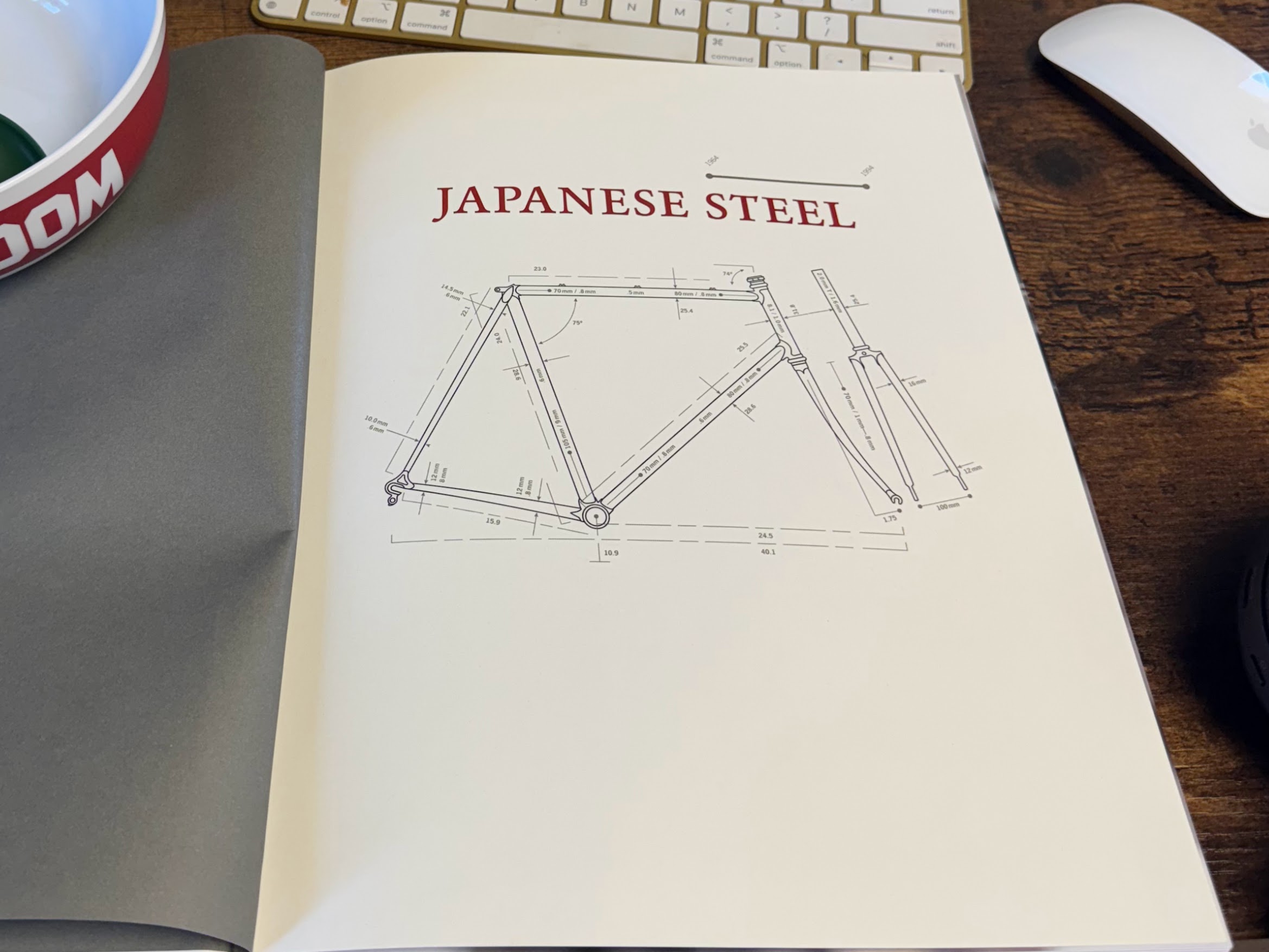
I am especially gone on Japanese steel, and I have thought about why. Part of it is the lugwork, the sense that a specific human being with a specific standard stood there and refused to let it be sloppy. But part of it is the philosophy baked into the metal itself. It is built to be maintained, not replaced. It assumes a long relationship. It assumes you will come back.
That is really what the whole thing is about, and it took a dead novelist's rant about Tupperware to show me. The materials are just a way of asking what kind of thing you trust. Do you trust the one that stays flawless and teaches you nothing and then betrays you all at once. Do you trust the one that is spectacular right up until it is a catastrophe. Or do you trust the one that shows every year on its face, that dents instead of shatters, that gives you warning, that can be repaired by hand.
I know which one I want to ride. I am starting to suspect it is also the one I want to be. I have not always been steel. I have been the aluminum that looked fine until the crack, and I have done a fair impression of carbon, all performance and then all pieces on the pavement. Steel is the only one of the three that believes in getting fixed. That the damage is not the end of the story. That a thing can be mended by somebody who cares enough to stand there with a torch and take the time.
So I am going to go learn to build them. Steel bikes, by hand. Not because it is efficient, and not because the world needs another guy with strong opinions about tubing. But because I want to spend some of my life making the kind of object that ages instead of the kind that just expires. Something that dents and keeps going. Something you can hand down. Something with a fatigue life long enough to outlast whoever started it, and enough grace to show its age along the way.
Mailer hated plastic because it refuses to become anything. I love steel for the opposite reason. It is always becoming something. Usually something better than it started. And when it finally does break, it lets you help.