
Emblems
Images and the lines that go with them.
All the words on this page are mine. The images are made with Midjourney, which I've been training toward a specific aesthetic. I do enjoy them. The pictures are AI-generated. The text is not.
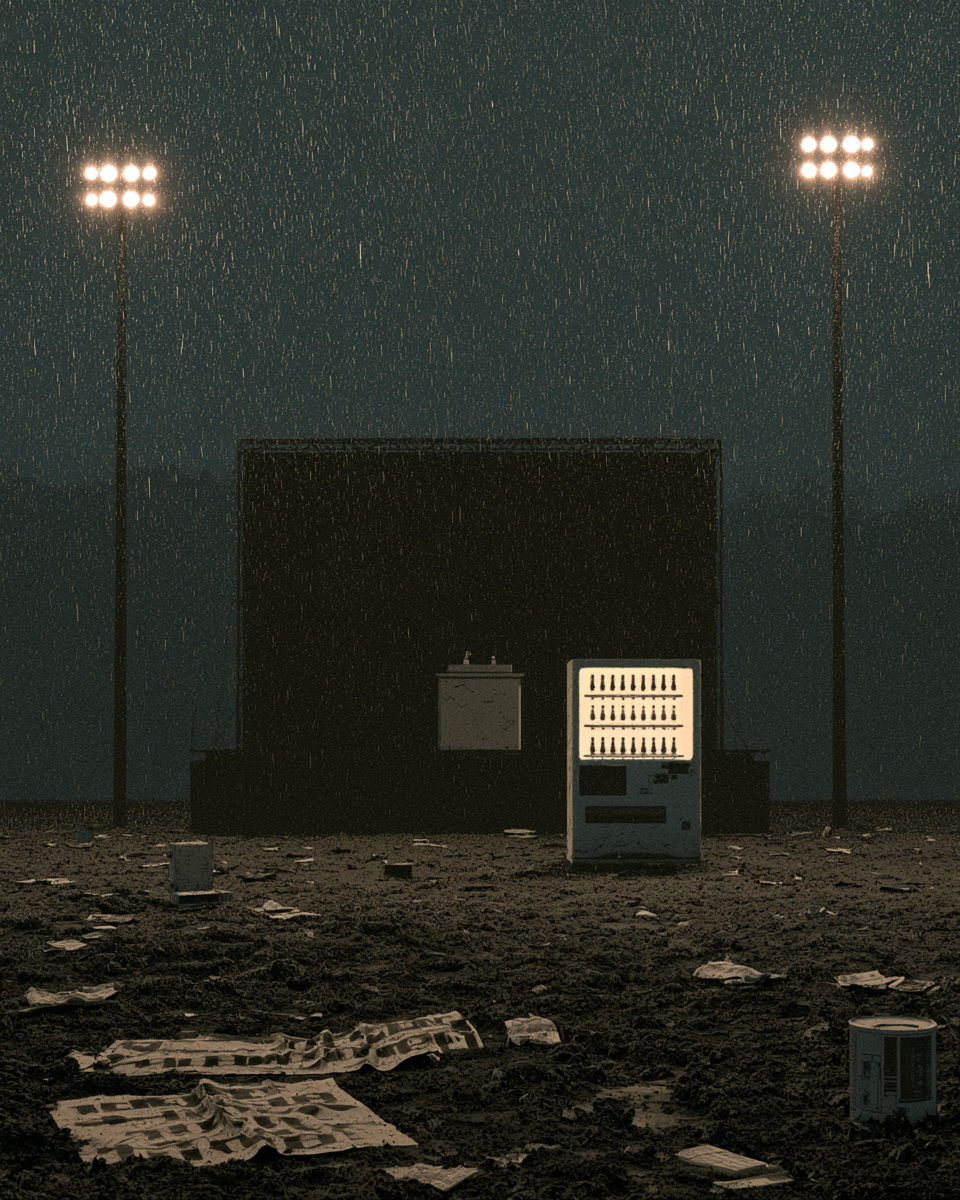
the podium is empty, the floodlights are on, and the only thing still running is the machine that takes your money.
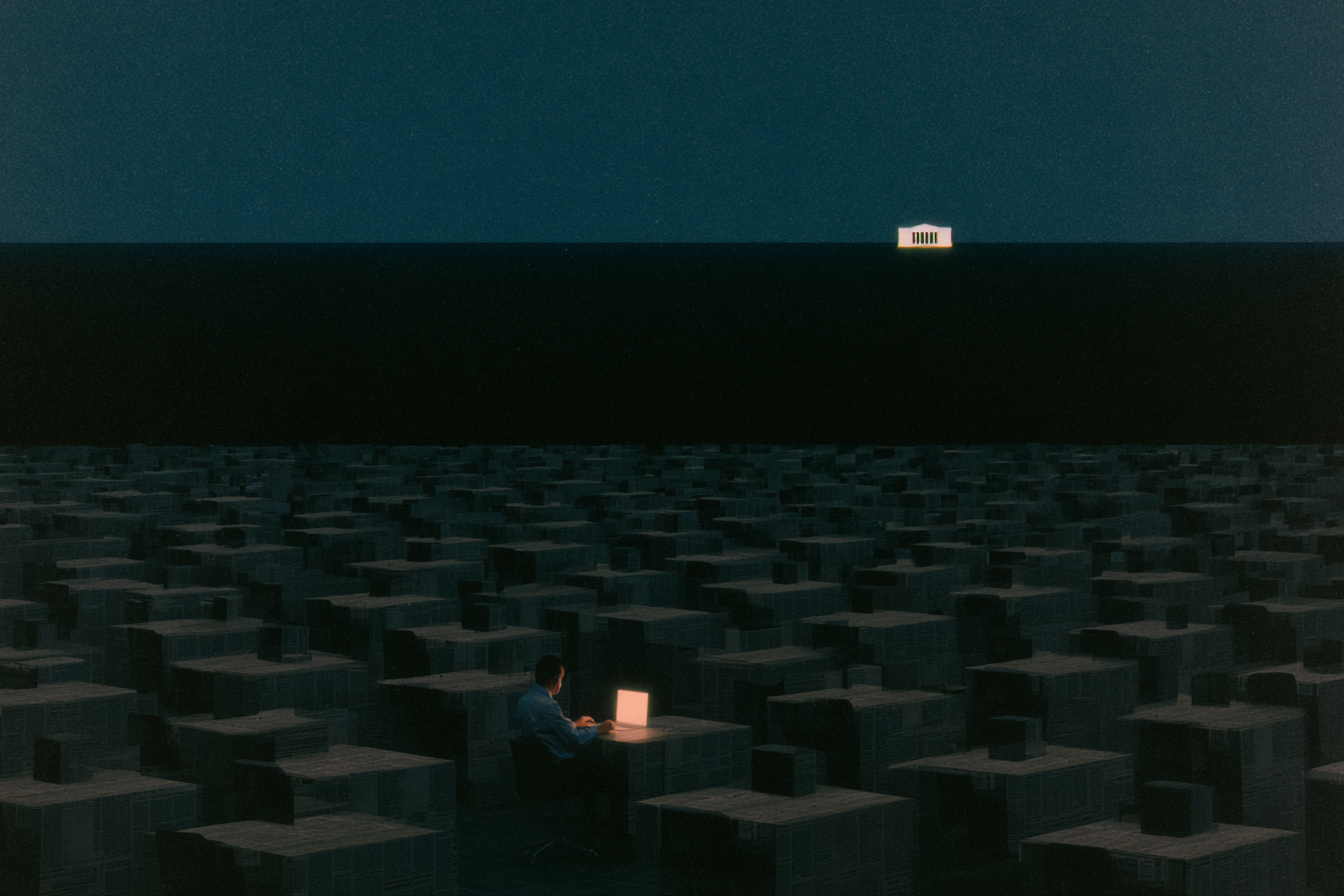
I found out what they bill for me on a Tuesday, by accident, off a spreadsheet somebody left open. Four times what I take home. I waited all afternoon to feel robbed, which is at least a clean feeling, and it never came. What came was worse: if I had done nothing that day, the invoice would have gone out the same. The gap between my wage and my price isn't theft. It's a rounding error.
A steelworker knows what he made. He can put a hand on it. I make files. Files on a server in a county I'll never visit, sentences chopped into packets and shot under an ocean, reassembled by a protocol with no opinion on the words, arriving as a document somebody opens for ninety seconds and forwards. The file becomes a number, the number pays the mortgage. The man who poured that slab could find it in the dark. I couldn't tell you where last quarter's work is stored, or whether it still exists, and in three years nobody has asked.
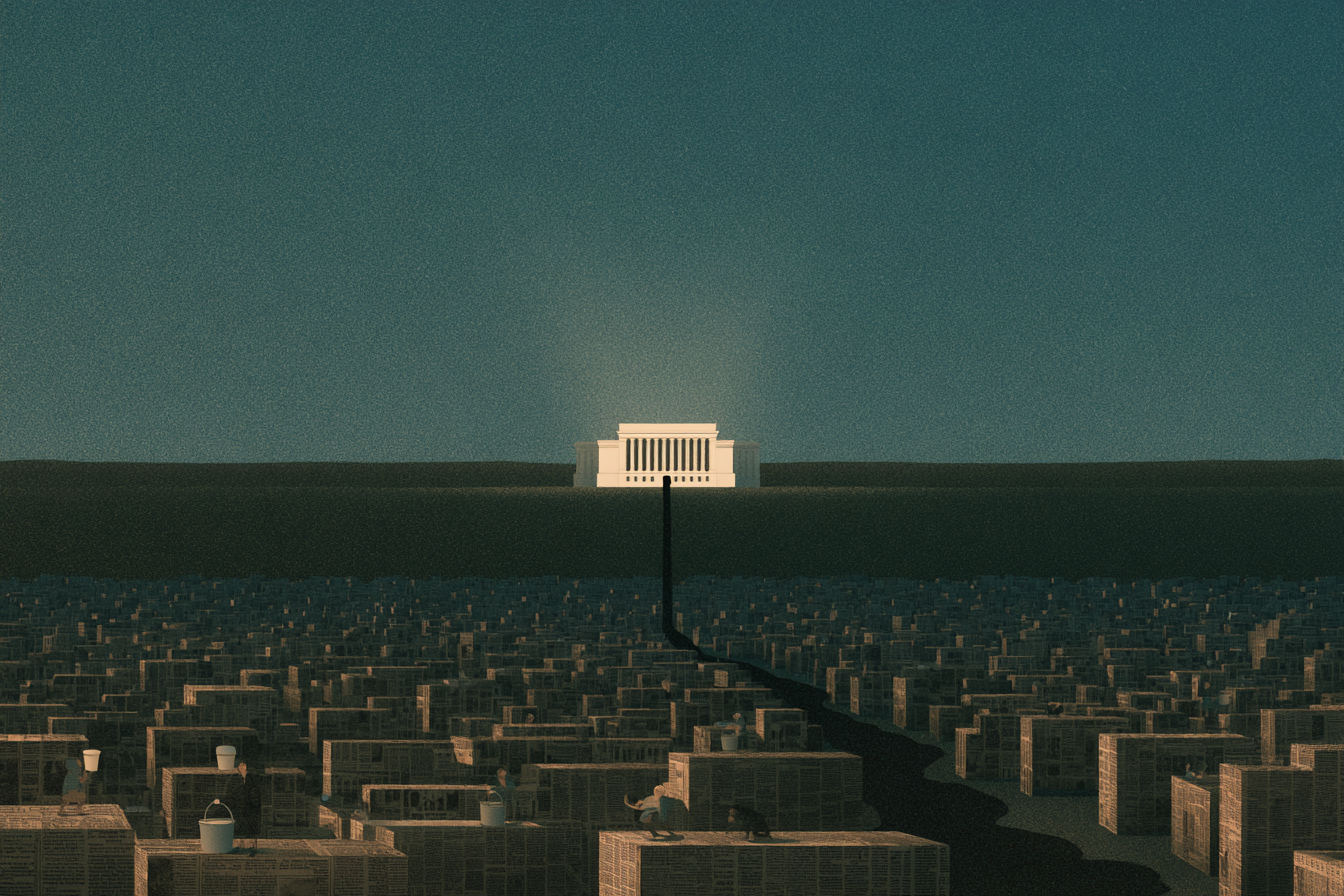
The building is always on the horizon and always lit, and the men inside it discovered that a country busy examining itself will never once look up.
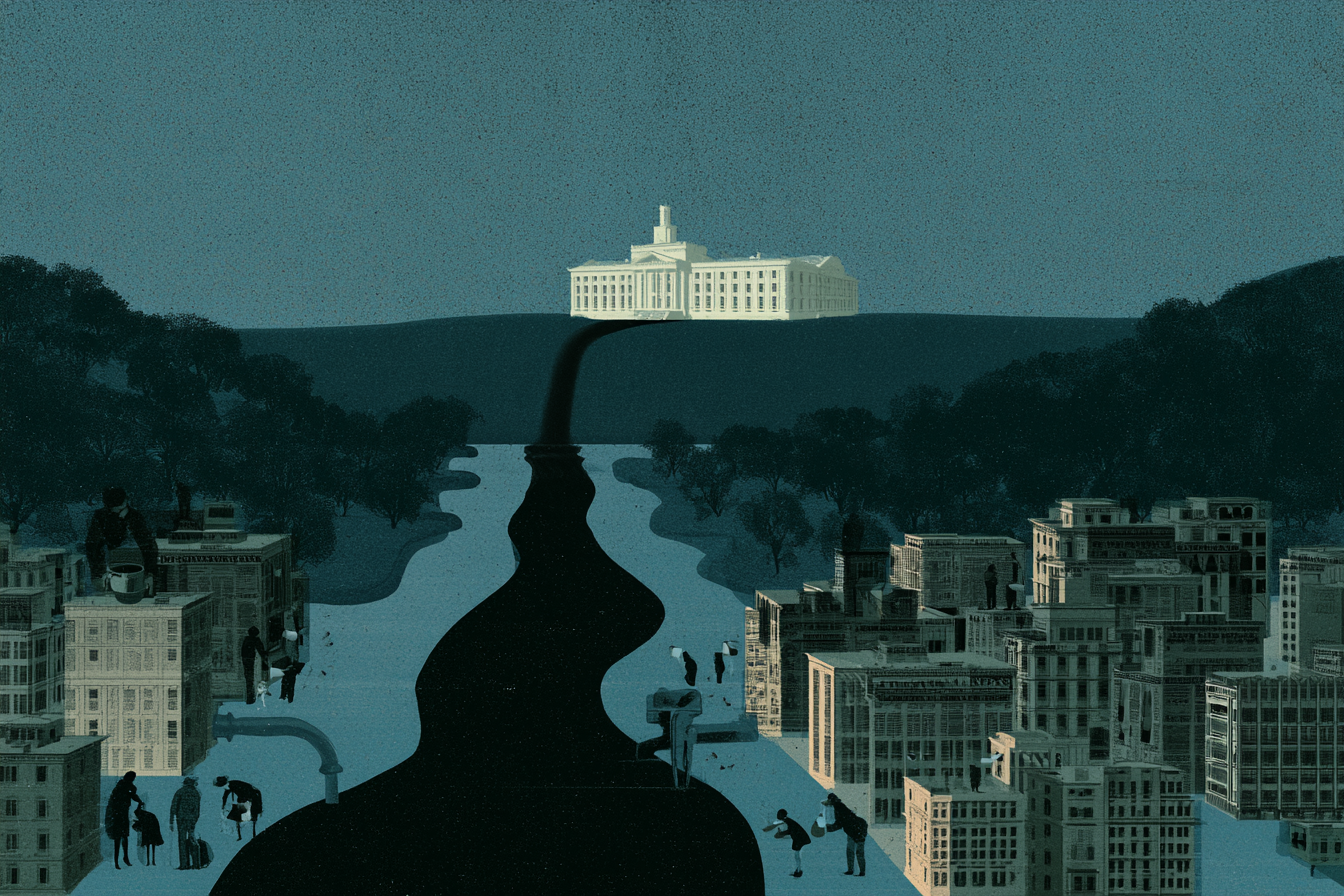
It was the neatest theft in the republic's history: they took class, which is a thing you can count, and swapped it for identity, which is a thing you can only confess, and then charged tuition for the confessional.
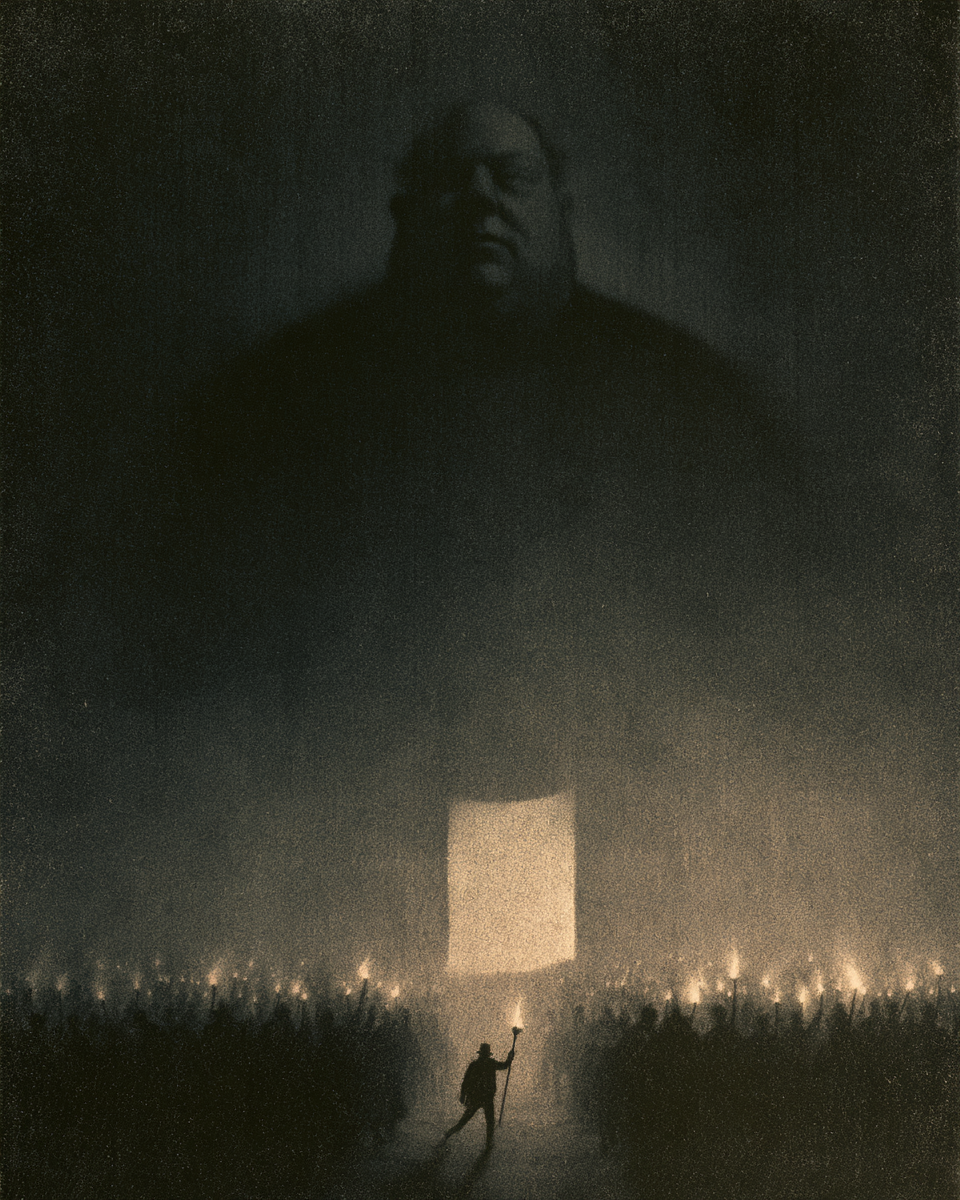
I've watched enough of these up close to know the failure mode: paid staff start outnumbering true believers, the mission gets vaguer while the fundraising gets sharper. Doesn't mean every cause ends there. It means those are the symptoms I watch for.
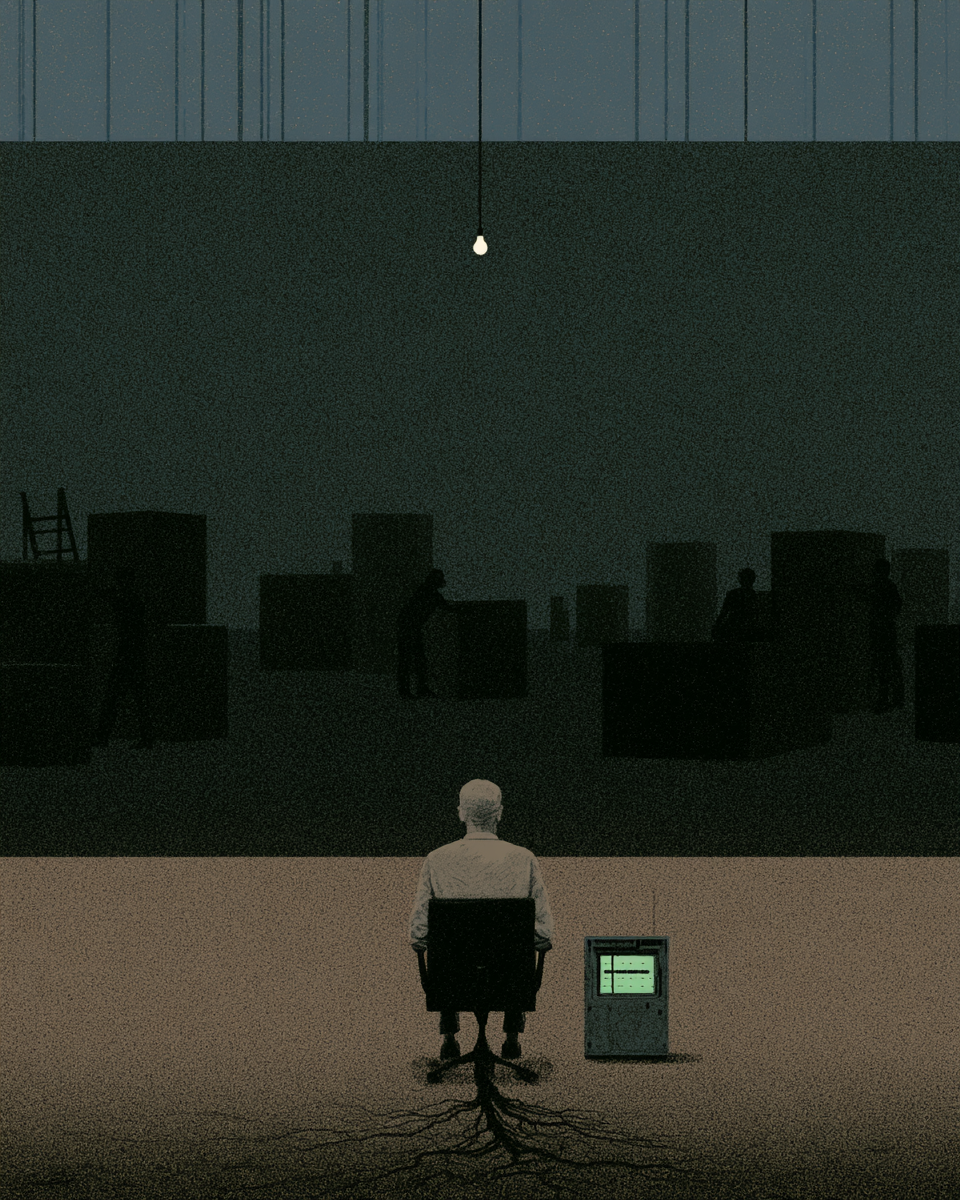
Mailer called it a law of life, so cruel and so just: grow, or pay more for remaining the same. It hit me like a ton of bricks, because by the time I read it I could already count what standing still had cost me. I printed it on my children's walls. I'd rather they learn it from paint than from the bill.
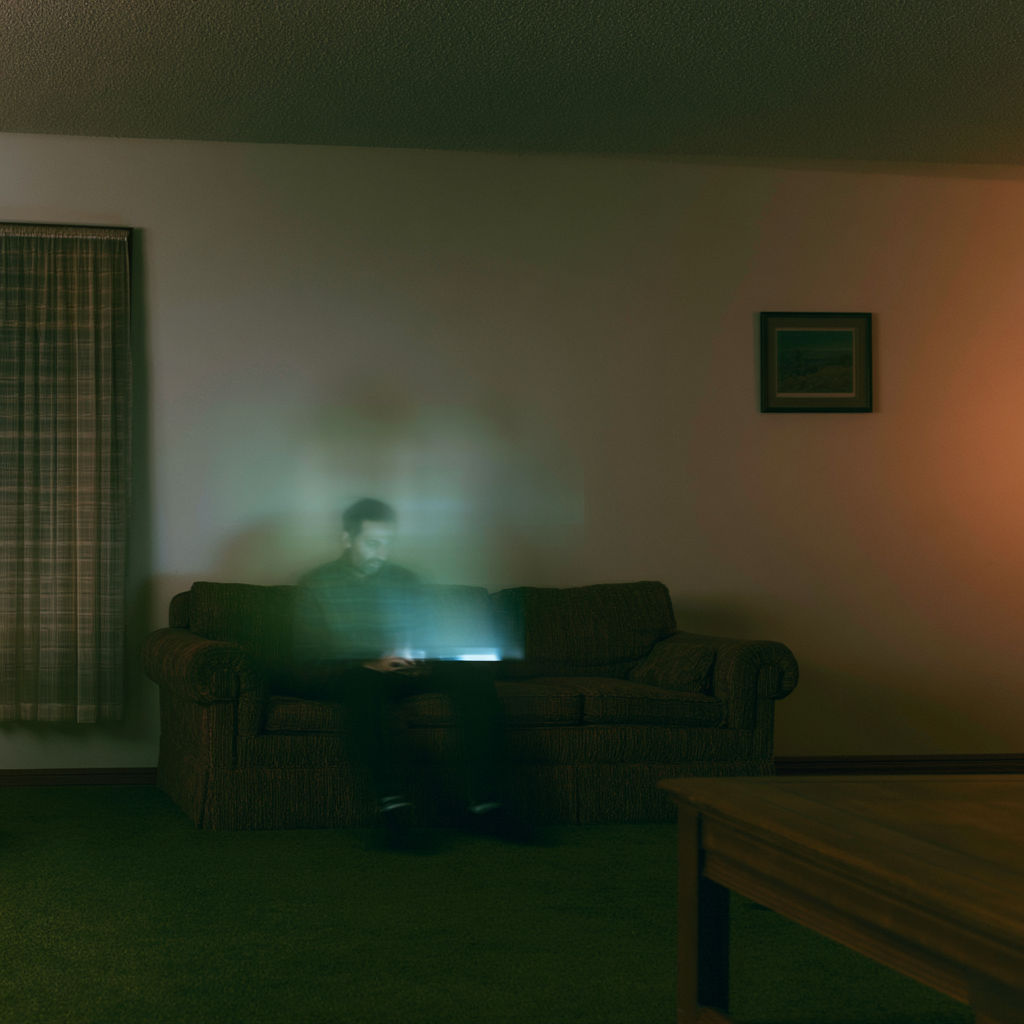
Twentieth-century man's natural role was anxiety, says Mailer. He was anxious about what the machines might someday do. Twenty-first-century man watches them do it in real time, on a screen he pays for monthly. His natural role is spectator at his own replacement.