
Legacy Systems
My first real job, and by real I mean the first one that did not involve a hairnet or a mop bucket at closing time, was hand coding HTML, CSS, and classic ASP to put orthotics medical journals online. This was the turn of the millennium. Somewhere out there a podiatrist needed to read a peer reviewed study about arch support, and I was the man who made that possible, one table tag at a time. I did not know it then, but I had already found my life's theme: taking the misaligned and making it load properly.
Twenty years in technology followed. A degree in Decision and Information Sciences, which is what you call computer science when you want to sound like you might also be useful in a meeting. Eight and a half years at Acxiom, a billion dollar data company, doing email marketing, which is to say I spent nearly a decade of my one wild and precious life helping enormous corporations whisper into the inboxes of strangers. After that, innovation consulting and software consulting with more than two hundred companies. Along the way I collected the certifications: A+, Network+, Security+. I can tell you why your machine is slow, why your network is leaking, and who is probably trying to get in through the door you forgot you left open.
Which makes it very funny that it took me until midlife to attach a debugger to myself.
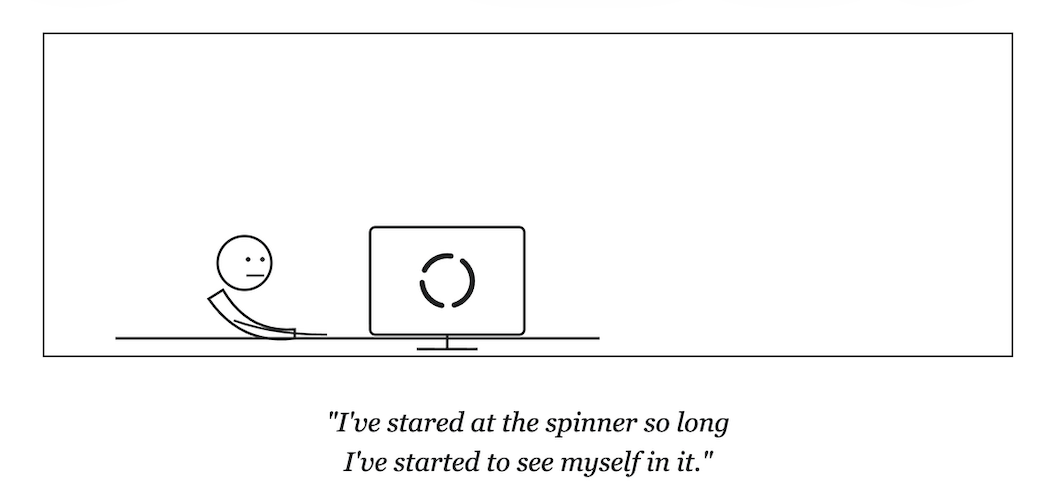
Because here is what nobody tells you when you finally sit down across from a therapist: you already know this material. If you have ever troubleshot anything, you have the entire conceptual framework for psychoanalysis pre installed. The field's founders were not describing anything more exotic than a system running code its user cannot see. They just had the misfortune of working before the vocabulary existed. Freud died in 1939, eight years before the transistor. The man was writing device drivers in Latin.
Start with him. Freud's model of the mind is an operating system architecture, full stop. The id is the kernel: raw drives, appetite, aggression, executing at the lowest level with no interest in your reputation. The superego is the compliance layer, every rule and parental prohibition you ever internalized, auditing all traffic. And the ego, the poor ego, is the scheduler in between, allocating resources so the whole system does not crash at a dinner party. When the conflict between kernel and compliance gets too hot, the ego deploys defense mechanisms, and every one of them has a technical name. Repression is moving a file to a hidden directory. Projection is blaming another machine for your own corrupted output. Denial is refusing to open the error log. The critical insight, the one that pays for the whole session, is that nothing is ever deleted. It is only hidden. And hidden processes still consume resources. This is why you are tired all the time about things you insist you are over. Check your task manager. Something is pegging the CPU, and it has been running since 1980.
Jung, Freud's protege turned apostate, added a layer beneath the personal. He proposed a collective unconscious, a standard library that ships preinstalled in every human being. Its modules are the archetypes, universal design patterns: the Mother, the Hero, the Trickster, and most usefully the Shadow, which is every trait you refused to compile into your self image. Refused, mind you, not removed. The Shadow is still in the codebase. It still executes. It just executes without your signature on the commit. Anyone who has ever inherited an undocumented repository from a departed developer knows exactly what Jung was talking about. The departed developer is you, at nine years old.
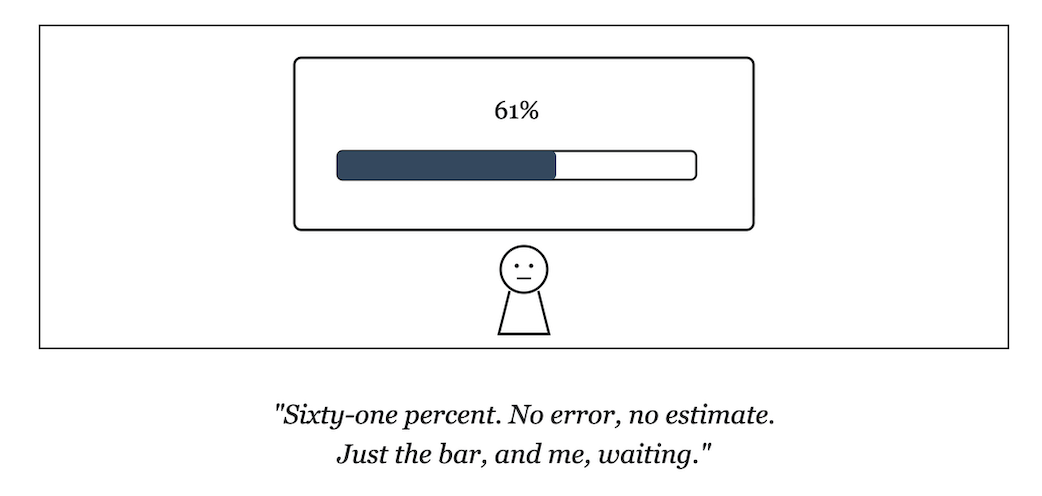
Adler, the third founder and the least famous, ran a different algorithm entirely. Forget the buried archive, he said. Humans are goal seeking systems. We all boot up small, weak, and outclassed, and the personality is an optimization function compensating for that original inadequacy. The Adlerian question is not what happened to you but what you are optimizing for, and whether the objective function got corrupted somewhere along the line. I spent eight and a half years optimizing email open rates. I can confirm that it is entirely possible to minimize the wrong loss with tremendous precision, quarter after quarter, and win awards for it.
But the school that dominates the modern therapy office came later, out of Britain: object relations and its cousin, attachment theory. Klein, Winnicott, Bowlby. Their move was the one that finally made the whole thing click for me, because it is a caching problem. Your earliest relationships get compiled into templates, classes that define what a caregiver is, what closeness costs, what happens when you need someone and say so. Every relationship you form afterward instantiates from those classes. If the original template says people leave, you will detect abandonment in perfectly stable connections, the way a browser serves you a stale page and swears it is live. You are not perceiving. You are rendering from cache. At Acxiom we had a word for building predictive models of human behavior from historical data. We called it the product. Psychoanalysis just points the model inward and asks who trained it.
So what is the therapist actually doing over there with the notepad and the untouched glass of water? Mostly, she is reading logs. When she asks about your childhood, that is source code review. When she goes quiet and lets you ramble, that is verbose logging: unfiltered output reveals which processes are actually running, as opposed to the ones listed in the documentation. And when she asks how you feel about her, right now, in the room, she is doing the single cleverest thing in the discipline. That is transference: you, running your old cached templates against a brand new person in real time. She gets to watch the bug execute live instead of reading your bug report, which, like all bug reports, was written by the least reliable witness available.
The interpretation, when it comes, is a proposed refactor. I wonder if you get angry when you actually feel afraid. That is all it is: making an implicit process explicit so that, for the first time, you have write access. And the relationship itself, the boring reliable weekly appointment, is the patch. Insight alone does not recompile anyone. I have read enough postmortems to believe this in my bones. Repeated new experience inside a reliable connection does the recompiling, slowly, at the speed of trust rather than the speed of thought.
Twenty years. Two hundred companies. Three CompTIA certifications verifying that I can diagnose, network, and secure any machine in the building except the one holding the certificates. I find this less embarrassing than I used to. The tools were always the same tools. I just spent two decades pointing them outward, which, a therapist might gently observe, is itself a defense mechanism with excellent salary and benefits.
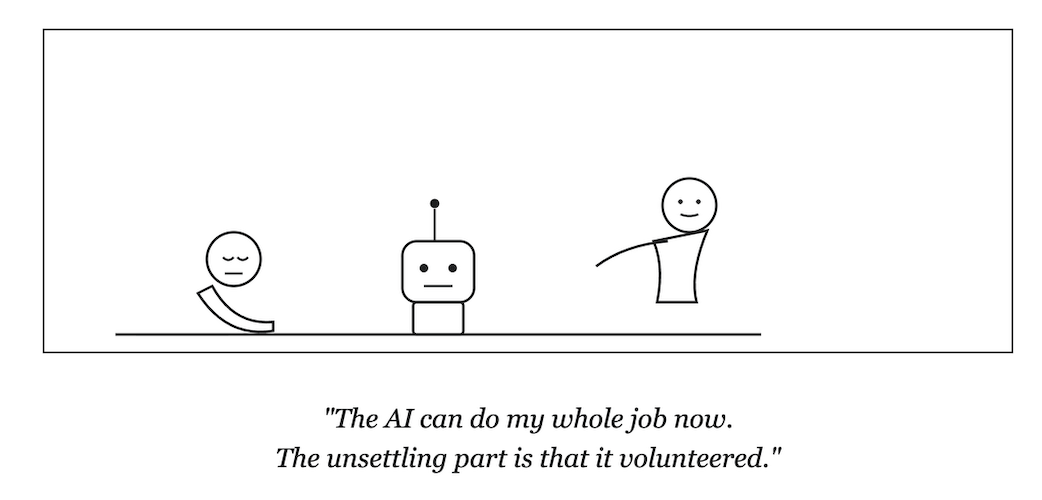
And I keep coming back to the orthotics journals. My first real job was publishing the science of small corrections: an insole here, a few degrees of realignment there, nothing dramatic, no surgery, just patient adjustment of the way a person meets the ground. Nobody gets a new foot. You get a slightly better relationship with the one you have, and over ten thousand steps a day, that turns out to be everything. Twenty years later I sit on a couch once a week and pay a professional to do the same thing to my gait of mind. Small corrections. Patient realignment. The old code still runs, because the old code always runs.
But somebody is finally reading it.